The battle between iPhone models is always an exciting one, especially when Apple releases its latest iteration. With the iPhone 16 now available, many are wondering how it stacks up against the previous generation, the iPhone 15. In this in-depth review, we’ll break down all the key differences between the two models, from design and performance to camera features, software, and pricing.
Table of Contents
- Introduction
- Design and Build Quality
- Display and Screen Technology
- Performance and Processor
- Battery Life and Charging
- Camera Features and Capabilities
- Software and User Experience
- Storage Options
- Connectivity and 5G Support
- Durability and Water Resistance
- Audio and Speakers
- Biometrics and Security Features
- Price and Availability
- Conclusion: iPhone 16 or iPhone 15?
1. Introduction
Apple continues to push the boundaries of innovation with its annual iPhone releases, and the iPhone 16 is no exception. Building on the success of the iPhone 15, the new iPhone 16 promises enhanced performance, a sleeker design, and more advanced camera technology. But with the iPhone 15 still being a formidable device, how much of an upgrade is the iPhone 16? This comparison will help you decide which device is best for your needs, whether you’re upgrading or buying a new iPhone for the first time.
2. Design and Build Quality
iPhone 16:
The iPhone 16 features a refined design, with slightly more rounded edges compared to its predecessor. It boasts a thinner and lighter frame, making it more comfortable to hold. The back is made from reinforced ceramic glass, offering better durability against drops and scratches. Apple has introduced new color options, including Midnight Blue and Sunset Gold, alongside the classic Silver and Space Gray.
iPhone 15:
The iPhone 15 was praised for its sleek design and durable ceramic shield, which continues to protect the device from everyday wear and tear. However, the iPhone 16 has taken it a step further with additional enhancements in build quality and materials.
Key Difference: The iPhone 16 offers improved durability and new color options, with a slightly slimmer and more ergonomic design.
3. Display and Screen Technology
iPhone 16:
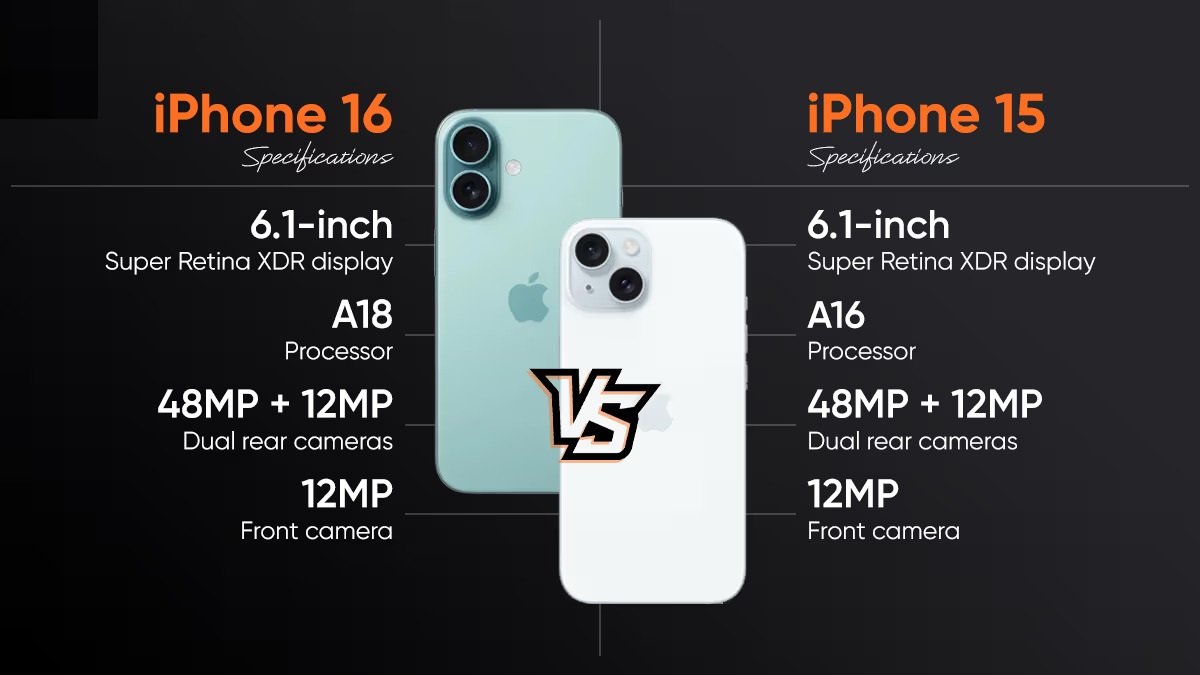
The iPhone 16 features an upgraded ProMotion OLED display with a higher refresh rate of 120Hz, providing smoother scrolling and more responsive touch input. The 6.1-inch and 6.7-inch display options remain, but with improved brightness and contrast levels, making it easier to view content in direct sunlight.
iPhone 15:
The iPhone 15 introduced an OLED Super Retina XDR display, which was already a significant upgrade from previous models. However, it maintains a 60Hz refresh rate, which is noticeable in side-by-side comparisons with the iPhone 16.
Key Difference: The iPhone 16 offers a 120Hz ProMotion display for smoother performance, along with better brightness and contrast.
4. Performance and Processor
iPhone 16:
Powered by the new A17 Bionic chip, the iPhone 16 offers a noticeable leap in performance compared to the iPhone 15’s A16 Bionic chip. The A17 features a 6-core CPU, with 2 performance cores and 4 efficiency cores, making multitasking, gaming, and resource-intensive apps even faster and more efficient. The neural engine has also been enhanced, offering better support for AI-based tasks and real-time image processing.
iPhone 15:
The iPhone 15’s A16 Bionic chip was no slouch, delivering fast performance for most users. However, the improvements in the A17 make the iPhone 16 faster and more future-proof for software updates and intensive applications.
Key Difference: The iPhone 16’s A17 Bionic chip offers superior performance and efficiency, making it better for gaming, multitasking, and AI-driven applications.
5. Battery Life and Charging
iPhone 16:
Apple has improved the battery life on the iPhone 16, offering up to 3 additional hours of usage compared to the iPhone 15. Fast charging is also supported, with up to 50% charge in just 30 minutes using Apple’s 30W fast charger. The iPhone 16 also introduces support for reverse wireless charging, allowing you to charge other devices like AirPods or an Apple Watch.
iPhone 15:
The iPhone 15 provided solid battery life, but it doesn’t feature reverse wireless charging. Fast charging was limited to 20W, meaning it took slightly longer to reach 50% compared to the iPhone 16.
Key Difference: The iPhone 16 offers longer battery life, faster charging, and reverse wireless charging.
6. Camera Features and Capabilities
iPhone 16:
Apple has made significant improvements to the camera system on the iPhone 16. It now features a 48MP primary sensor with larger pixels, which helps in low-light photography. The ultra-wide camera has been enhanced for better edge-to-edge sharpness, and the telephoto lens offers up to 5x optical zoom. The iPhone 16 also introduces AI-driven features like Smart HDR 5 and improved portrait mode, offering better depth and clarity in photos.
iPhone 15:
The iPhone 15’s camera was one of the best in the market during its release, featuring a 12MP primary sensor, ultra-wide lens, and up to 3x optical zoom. While it still takes excellent photos, the iPhone 16’s camera upgrades are particularly noticeable in low-light conditions and zoom capabilities.
Key Difference: The iPhone 16 offers a more advanced 48MP camera system with better low-light performance and AI-enhanced features.
7. Software and User Experience
iPhone 16:
The iPhone 16 ships with iOS 17, offering new features like customizable lock screens, improved widgets, and expanded FaceTime capabilities. The software is optimized for the iPhone 16’s hardware, making it feel even more responsive and seamless during use.
iPhone 15:
The iPhone 15 initially launched with iOS 16, and while it can be upgraded to iOS 17, the performance and experience may not be as optimized as it is for the iPhone 16.
Key Difference: The iPhone 16 provides a more optimized experience with iOS 17, though both devices can run the latest software.
8. Storage Options
iPhone 16:
The iPhone 16 comes with a base storage of 256GB, with options for 512GB and 1TB, making it ideal for users who require large storage capacity for photos, videos, and apps.
iPhone 15:
The iPhone 15 starts at 128GB, with options for 256GB and 512GB. For those needing more storage, the iPhone 16 offers higher-capacity options.
Key Difference: The iPhone 16 offers more storage options, starting at 256GB.
9. Connectivity and 5G Support
iPhone 16:
Both the iPhone 16 and iPhone 15 support 5G, but the iPhone 16 introduces support for Wi-Fi 6E, offering faster and more reliable wireless connectivity. This makes streaming, gaming, and downloading large files even quicker on supported networks.
iPhone 15:
The iPhone 15 supports 5G and Wi-Fi 6, but lacks the newer Wi-Fi 6E capabilities.
Key Difference: The iPhone 16 supports Wi-Fi 6E, offering faster wireless speeds.
10. Durability and Water Resistance
Both the iPhone 16 and iPhone 15 offer IP68 water and dust resistance, meaning they can withstand being submerged in water for up to 30 minutes at a depth of 6 meters. However, the iPhone 16’s improved materials, such as its reinforced ceramic glass, provide enhanced durability against drops and scratches.
Key Difference: The iPhone 16 offers slightly improved durability thanks to its enhanced materials.
11. Audio and Speakers
iPhone 16:
The iPhone 16 introduces spatial audio enhancements, providing a more immersive sound experience. Whether listening to music, watching videos, or playing games, the audio is richer and more dynamic.
iPhone 15:
While the iPhone 15’s stereo speakers were praised for their clarity, the iPhone 16’s audio improvements make it the better choice for audiophiles and media enthusiasts.
Key Difference: The iPhone 16 offers improved audio with spatial sound capabilities.
12. Biometrics and Security Features
Both the iPhone 16 and iPhone 15 use Face ID for secure unlocking and authentication. However, the iPhone 16 features faster facial recognition, thanks to improvements in the TrueDepth camera system. Additionally, the iPhone 16 introduces a new “under-display” fingerprint sensor as an alternative to Face ID.
Key Difference: The iPhone 16 offers faster Face ID and an under-display fingerprint sensor for added convenience.
13. Price and Availability
iPhone 16:
The iPhone 16 is priced slightly higher than the iPhone 15, with the base model starting at $1,099 for the 256GB version. Given its new features and enhanced performance, the price hike is justified for many users.
iPhone 15:
With the release of the iPhone 16, the iPhone 15’s price has dropped, making it a more budget-friendly option for those who don’t need the latest features.
Key Difference: The iPhone 16 is priced higher but offers better value in terms of features and performance.
14. Conclusion: iPhone 16 or iPhone 15?
When deciding between the iPhone 16 and iPhone 15, it ultimately depends on your needs and budget. If you’re looking for cutting-edge performance, an enhanced camera system, and future-proof features like 120Hz display and Wi-Fi 6E, the iPhone 16 is the clear winner. However, if you’re content with the excellent performance of the iPhone 15 and want to save money, the iPhone 15 remains a fantastic option.
Both models offer incredible performance, but the iPhone 16’s improvements in speed, camera quality, and overall experience make it a worthy upgrade for tech enthusiasts.